How-to
How to reduce treadmill noise for neighbours
Published
Note: This page contains affiliate links. If you buy through them we may earn a commission at no extra cost to you. Learn more
In short
Most treadmill noise that reaches neighbours is footfall thud carried through the floor, not motor hum. Put the machine on a dense rubber mat, add anti-vibration pads under the feet if the maker allows, place it near a wall or over a joist rather than mid-floor, keep the belt lubricated and tensioned, and walk rather than run at times your neighbours are likely to be home.
Products for this job
Compare all 7 productsKALWOL 4-in-1: 10% incline, 40 dB or less, 160 kg
Check price on AmazonAffiliate linkFOUSAE 5-in-1: 1 to 12 km/h, fold-down handle, 160 kg
Check price on AmazonAffiliate linkGEOTECH K3000: 20% auto incline, 4.0 HP, 181 kg
Check price on AmazonAffiliate link
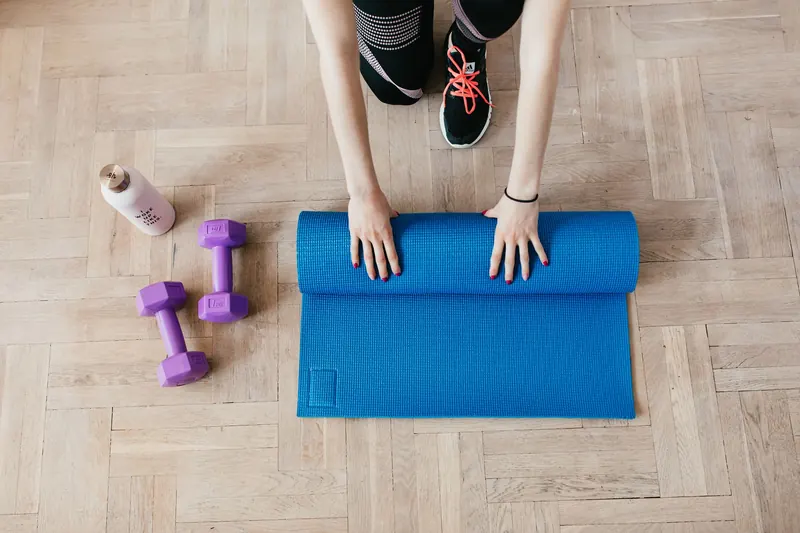
Treadmills and walking pads make two kinds of noise. Airborne noise, such as motor hum and belt whirr, travels through the air in your room. Structure-borne noise, mostly the thud of each footstep, travels through the floor and walls into the flat below or next door. The second kind is what most complaints are about, and it needs different fixes. This guide explains where the noise comes from and the practical steps that help most: mats, anti-vibration pads, placement, maintenance and walking speed. It cannot promise silence, but it can make a real difference.
Motor hum vs footfall thud
Listing decibel figures usually describe the motor, measured by the maker in an unknown way. They do not include footfall, which is why a pad listed at 45 dB can still disturb the flat below.
| Noise | Source | How it travels | Main fixes |
|---|---|---|---|
| Hum or whine | Motor and controller | Through the air | Quieter motor, closed doors, rugs |
| Whirr or hiss | Belt over the deck | Through the air | Lubricate and tension the belt |
| Thud | Footfall on the deck | Through the floor | Dense mat, placement, slower speed |
| Rattle or click | Loose screws, rollers | Both | Tighten, maintain, repair |
Use the right mat
A dense rubber or composite mat under the whole machine is the single most useful step. It spreads the load, absorbs some vibration and stops the frame rattling on hard floors. Thicker and denser generally does more for vibration than thin foam, which mainly protects the floor. Choose a mat larger than the pad's footprint so no foot or wheel sits off the edge.
On carpet, a firm mat keeps the pad level and lets air reach the motor. See do you need a treadmill mat for sizes.
Anti-vibration pads and placement
Anti-vibration pads or rubber pucks under the feet can decouple the frame from the floor a little more. Use them only if the maker allows, keep the machine level and stable, and do not stack so many layers that it rocks.
Where you put it matters. Floors flex more in the middle of a span and less near load-bearing walls or directly over joists. In many UK homes, joists run between the front and back walls, but check your own floor. Placing the treadmill near a wall, or across joists rather than between them, often reduces thud. Avoid the spot directly above a neighbour's bedroom if you can.
Maintenance that cuts noise
- 1
Lubricate the deck as the manual says. A dry belt hisses and makes the motor work harder. See how to lubricate a walking pad.
- 2
Check belt tension and centring. A loose belt slaps; a tight one strains the rollers. See how to adjust a treadmill belt.
- 3
Tighten frame screws and bolts that have worked loose.
- 4
Vacuum dust from around the motor vents. See how to clean a treadmill belt.
- 5
If a noise persists, use walking pad making a noise to trace it.
Note:Unplug the machine before any maintenance. Do not open the motor cover unless the manual says it is safe; leave motor and electrical repairs to the maker or a qualified repairer.
How you walk
- Walk rather than run when neighbours are likely to be home. Running thud is much louder.
- Keep to a steady, moderate speed; very slow, heavy steps can also thud.
- Wear cushioned trainers rather than walking in hard shoes.
- Walk in the centre of the belt, where the deck is best supported.
- Avoid early mornings and late evenings, and talk to your neighbours if you share a floor.
Choosing a quieter machine
If you are buying for a flat, look for a brushless motor, multiple shock absorbers under the deck and a walking pad rather than a running treadmill. Brushless motors are usually quieter in operation; see brushless vs brushed walking pad motors. For comparisons, see the best quiet walking pads and the best under-desk treadmills. If noise through the floor is the main concern, treadmill vs exercise bike explains why a bike has no footfall thud.
Frequently asked questions
Do treadmill mats reduce noise? A dense mat reduces vibration and rattle through the floor. It does not remove footfall thud completely.
How loud is a walking pad? Makers often list motor noise around 40 to 45 dB, but footfall adds to that and travels through floors.
Can I use a treadmill in an upstairs flat? Many people do. Use a dense mat, walk rather than run, place it near a wall and check your lease for any rules.
Is a walking pad quieter than a treadmill? At walking speeds they can be similar. Treadmills used for running are louder because of footfall.
What you need
- Check price on AmazonAffiliate link
KALWOL 4-in-1: 10% incline, 40 dB or less, 160 kg